Pages

Wednesday, January 1, 2014

Religion around the World: Let's Learn about Shintoism


To kick off the New Year, I thought I'd highlight the Shinto religion as the first in a monthly series called "Religion around the World." Shintoism is native to Japan, and  New Years is a big occasion at Shinto shrines throughout the country. I knew relatively nothing about Shintoism before moving to Japan, but it's a very interesting religion. 

Let's go over the basics, shall we?

How old is it? Shintoism is indigenous to Japan. It is so old that there is no founder, and it's rituals and beliefs date back to prehistory. It was called "Shintoism" or "Way of the Gods" after Buddhism came over to Japan around 550 CE, so as to avoid being mixed up with the new Buddhist ideas. 

Where is it practiced? Shintoism is practiced only in Japan, making it very unique.

Does Shintoism have a holy text? Nope. There are, of course, legends and stories written down but none that are used as canonical scriptures.

What or who does Shintoism worship? There is no God in Shintoism, but instead, a belief in spiritual beings or powers, called "Kami." 

What exactly are Kami? Kami are gods, spirits, ancestors, and natural forces that are around us all the time. They are concerned about human beings, and if we treat them properly (here's where all the rituals come in) they can intervene to help us have a happy life. Virtually everything contains a kami - the mountains, the trees, the ocean, the sky, rivers, etc. Even people who achieved great things in life can become kami after their death. 

What does Shintoism require? Shintoism does not require its followers to adhere only to Shintoism, and as such, many Japanese practice both Buddhist and Shinto rituals and traditions. Shintoism teaches ethical principles, but does not have strict commandments. Followers are asked to practice rituals that allow human beings to communicate with Kami.

Where do Shinto followers worship? Shrines are places designed to facilitate the interaction of humans and kami. Shrines are built to house kami, with a gate (called "torii" in Japanese) that separates the ordinary world from the sacred area around the shrine. Families may also have a small home shrine, inside their house, that acts as a substitute for a larger shrine on a daily basis. It is believed that no matter the size or location of a shrine, that the kami literally dwells there and the shrine must be treated with the utmost respect. 

A "torii."
Now, for a few more details.

What are some key Shinto teachings? 

  • Human beings are born pure. Shintoism teaches that human beings are born inherently good, and that we are all connected to the divine soul. 
  • Harmony is central to life. In Japan, "wa" means harmony, and in order to be happy and productive, humans must live a harmonious life. Kami's help humans achieve this.
  • Our deeds either create impurity or purity in our lives. Shinto rituals help us to cleanse ourselves of impurities. 
  • Shintoism does not differentiate between our world, and any other supernatural worlds. Everything - human beings and spirits - coexist. 
  • There are no moral absolutes. Did you get that? NO MORAL ABSOLUTES. Whether or not an action or thought is good or bad depends on the context: circumstances, intention, purpose, time, location, etc.
  • Shintoism isn't overly concerned with an afterlife. It is concerned with life in the here and now. 

What is a popular Shinto festival or occasion? 

New Year's! Shrine attendance is huge on New Year's Day, called "Oshogatsu" in Japanese. The Japanese visit shrines to thank kami, ask for kamis' blessings in the new year, and to make resolutions in front of the kami. Popular shrines in Japan may expect hundreds of thousands - sometimes even millions - of visitors during New Year's week.

Photo credit: Alafista

One of the things that I find so interesting about Shintoism is its integration with other religions. Many Japanese are both Buddhist AND Shinto. When babies are born, they are blessed at a Shinto shrine. When people die, they are given a Buddhist funeral. For the Japanese, Shintoism has become a way of life and it does not require a profession of faith for one to be considered Shinto. As an American who has so often seen the inability of religions to live and work together within America, I admire the seamless intermingling of Shintoism with other beliefs and religious practices.

I hope you learned a thing or two about Shintoism. Most of this information was taken from one of my favorite educational books for children, "What Do You Believe?" from DK Publishing, the BBC informational site on Shinto, and Wikipedia, if you'd like to learn more.

What do you find most interesting about Shintoism? Is there anything else you'd like to know? 

Monday, December 30, 2013

Plans for the New Year


We've had a busy December with travels to Hiroshima and family coming in for Christmas. Now that things have settled back down, there are only a couple of days left in 2013 and I've been thinking a lot about what I want for myself and this blog in the upcoming new year.

I don't really know what I'm doing here, in this online space, but I do know that part of me yearns to be here. I have lots of ideas floating around in my mind... so many that I often find it difficult to stay with a single topic long enough to complete a post. I think it might be helpful (for you? or maybe just for me?) to outline the kinds of topics I'm thinking of taking on here at The Cultivated Faith. Of course, suggestions are welcomed as well. :)

Book Reviews

If you see me at the library, you'll most likely find me in the spiritual and religious section. I have stopped apologizing for liking these kinds of books... It's just who I am. I have a long list of books I'd like to read within these categories and that list seems to grow longer every day. So, I thought it might be nice for me to post book reviews of the books I've been reading. Maybe even to blog throughout a book if I find a particularly good one. The first up on my list? "Love Wins" by Rob Bell. I read this book on my Kindle, but bought a hard copy that finally came in the mail. Because I had borrowed the Kindle version, all my notes are gone so it looks like I'll have to read it again and highlight the hard copy. Darn. :) I have LOVED this book, and can't wait to write about it. You're welcome to get a copy and read along with me - I'd love to hear your thoughts about it.

World Religion Spotlights

I minored in Religious Studies, and I still learn new things about the world's religions every day. I'd like to shine a light on one of the world's religions, maybe once a month, with information for adults who are interested, as well as resources for teaching children. We live in a global community, people. We need to learn more about each other.

Religious Leader Spotlights

There have been many, many people to influence the world's spirituality and religion. I'm talking religious leaders, thought-reformers, activists, missionaries, and everyday people who found themselves doing something miraculous. Let's learn about them! And let's teach our children about them too.

Parenting Dilemmas

Do you have children who ask tough questions? Are you clueless about how to answer them? Me too! It's hard to navigate questions about death, God, heaven, and hell, when you don't subscribe to a singular religion. And it's difficult even when you do! I hope to tackle some of these subjects by being honest about my own struggle to find answers, as well as by offering some suggestions on talking about these topics with our children.

New Ways of Thinking

I hope that every reader who happens upon or searches for this blog is cultivating their spiritual lives.  I believe that we always have more to learn, and I want to push my readers to continue their spiritual growth rather than letting it stagnate. We are on Earth to expand our consciousness, to live a more awakened life, and to fully realize that we are spiritual beings having a human experience. I don't ever expect to know all the answers, but I sure do enjoy the search for them. On this blog, you can expect honesty, thoughtfulness, and a genuine desire to better understand those who may be different than me. This will not be a place for judgement and condemnation. There's enough of that in the world. It's high time we chose a different path.

Please let me know if you have suggestions for this blog. I'd love to hear them.


Monday, December 9, 2013

Whatever your reason for Christmas, I simply hope you have one.


"Christmas is when you celebrate the birth of Jesus." That's what my oldest daughter told her sister.

Even though we don't really consider ourselves a Christian family (at least in the same sense that other Christian families would probably describe themselves), I want my children to be religiously literate. And I want them to understand the interconnectedness of all religion and spiritual life. So, we bought a nativity last year (I highly recommend this one) and I have devoted more energy this year to making sure they understand the nativity story and the meaning that so many other families give their Christmas holiday.

But hearing my daughter say so matter-of-factly that Christmas is the celebration of Jesus' birthday made me feel a bit uneasy.

I'm not here to debate whether or not Christmas IS Jesus' birthday, or whether or not it should be celebrated as such. I am, here, however, to figure out how these ideas fit into my own family. One of the things that bothers me most about religion is the fact that so many people believe they know the right answers. I have always said that when it comes to my children, I will not care what religious or spiritual beliefs they hold. I just don't want them to grow up believing that everyone else should believe exactly as they do.

"If you've got all the answers, then don't call what you do faith." - Brene Brown

So because we've read the nativity story in a children's Bible story book, and we've watched a beautiful narration of the nativity story (highly, highly recommend this video - FREE with Amazon Prime), and we've talked about the birth of the "light of the world," my very literal 5-year-old came to believe that this was the meaning of Christmas. Who can blame her? 

What's important for me, with children ages 5 and 4, is that Christmas has some sort of meaning to them. 

Regardless of what you believe, it's important to believe in something -  be it your religion, the Universe, or simply human compassion. With all it's different meanings, traditions, and historical influences, Christmas provides an opportunity for many of us to come together during an often gloomy and cold time of year (depending on where you live, of course!). From the earliest records we have of civilization, humans have been celebrating things at this time of year. Most common was the winter solstice - the shortest day of the year, which meant more sunlight in the days to come. Humans have always felt a desire to come together and celebrate. 

So whatever your reason for Christmas, I hope this season is full of joy and love for you and your family. Christmas, for me, is a time to take notice of how wonderful it is to have family - near and far - who love us. It's a time to shower the people I love with gifts. It's a time of warm food with friends, soft lights on evenings when the sun sets too early, and a reminder that the world is a good place. And whether my children believe it literally or figuratively, it's a time to celebrate a special light that came into the world many, many years ago. 

I just want my children to believe in something. 

“As long as you have life and breath, believe. Believe for those who cannot. Believe even if you have stopped believing. Believe for the sake of the dead, for love, to keep your heart beating, believe. Never give up, never despair, let no mystery confound you into the conclusion that mystery cannot be yours.” ― Mark Helprin, A Soldier of the Great War

What do you want your children to believe in during this holiday season? I'd love to hear your thoughts.

Monday, December 2, 2013

Truth in the Tinsel: The Light of the World

I happened upon an Advent ebook called, "Truth in the Tinsel: An Advent Experience for Little Hands." This is a book for Christian families, with the purpose of teaching children about "the greatest story ever written and the greatest gift ever given - God's own Son, Jesus the Christ!" While the premise of the book doesn't fit like a glove for my own family, I think it is a great resource. However, if you're a bit like me and want to tweak the book to better fit your own values and beliefs, I'm going to give it a try and will post my alterations here. I will probably not be doing every activity and craft during advent, and let's be honest - it may completely fall by the wayside if I'm feeling overwhelmed with holiday obligations. No activity, tradition, or outing is worth a stressful and irritated Momma. 

So, here is the topic for Day 1: The Light of the World. How could I not do this one when I wrote just yesterday about this very topic? 

The image of an inner light permeates many world religions. In talking with my children about the "light of the world," this Christmas, I'm going to make sure to emphasize that this idea is shared by lots of people all over the world.

We will watch a video from Brain Pop about the festival of Diwali. "Diwali, or Dipawali, is India's biggest and most important holiday of the year. The festival gets its name from the row (avali) of clay lamps (or deepa) that Indians light outside their homes to symbolize the inner light that protects us from spiritual darkness. This festival is as important to Hindus as the Christmas holiday is to Christians." (National Geographic)

We will talk again about Hanukkah and the ritual lighting of candles each night. The Jewish Torah, or what Christians refer to as the Old Testament, says in Proverbs 20:27 "A candle of God is the soul of man." 

Then we will read Matthew 5:14 where Jesus said, "You are the light of the world." 

The light is in us. 

Jesus, then, is important to remember at Christmas because he brought in him a new kind of light - a brighter light - and spent his life trying to remind us of the light residing in ourselves, and how to make that light stronger. 

I will talk with my kids about how they feel when they're in darkness. Is darkness scary? Are things hard to see? How do they feel when they find a light, or turn on a light? Can they see things more clearly? 

Jesus wants them to always remember that they have a light inside of them. And the more attention we give that light, the more light we'll spread to others, and the more connected we'll become to God [or insert the word that works for you here - the Universe, the Divine, etc.], the source of all light. 

We will wrap up our lesson about our inner lights by making a light ornament, found in the "Truth in the Tinsel" ebook. 
Photo taken from here. 

If you'd like to purchase your own copy of "Truth in the Tinsel", please head here. 

Do you have any suggestions to add to this lesson and activity? I'd love to hear them!

Sunday, December 1, 2013

The Light of the World


Most every Sunday, a small group of people gather in my home for some coffee and community. We all met each other because of an interest in the Unitarian Universalist church, and we usually spend our Sunday mornings drinking coffee, listening to a podcast, and having some discussion afterwards.

This morning, we listened to a podcast by Barbara H. Gadon, Interim Senior Minister at First Unitarian Church in Chicago. It was titled "The Light of the World," and, not surprisingly, was about the upcoming celebration of Jesus' birth and that saying we hear so often that He is the "light of the world." 

In Matthew 5:14, Jesus said, "You are the light of the world. A city built on a hill cannot be hidden.  No one after lighting a lamp pus it under the bushel basket, but on the lamp stand, and it gives light to all the house. In the same way, let your light shine before others, so hat they may see your good works and give glory to your father in heaven." 

For much of my life, I heard something said about Jesus being the light of the world and I got the impression that Jesus was a light sent to our dark world. But if you read that passage above from Matthew, it's very clear that Jesus was telling us that the light has been here all along. "You are the light of the world." WE are that light. We all posses that divine spark. 

"'The light of the world'" was a common expression in Jewish tradition at that [Jesus'] time. Rabbis taught that God was the light of the world, or that the Torah or the tribe of Israel was the light of the world. So saying, 'You are the light of the world' to ordinary people, most of whom were poor and struggling, was something radically different. Different ways to understand this might be: You are like God. Or, you have God in you. Or, your heart is as important as the Torah. It would have startled most people; it would have enraged the priests as blasphemy. It would also have given people hope." - Barbara H. Gadon

In the way I used to intepret it, "the light of world," had a feeling of exclusivity to it - that only those people who took Jesus as their savior could have the light in their life. That Jesus was the only light. But I don't think that's what Jesus ever really intended. I believe Jesus was sent as a sort of reflection of the light we already posses - a way for us to see what living IN the light, WITH the knowledge of the light, can look like. Jesus pointed the finger not at himself, but at all of us.

"He was speaking to the rest of us. You, whose marriage failed, or who remained single in a world where people are expected to be married - you are light. You with a jailed child, you are light. Your child is, too. You who work at a job you hate, you who lost your job -- you are light. You are light when your don't like yourself very much, when you have failed. That's the miracle of the light - God in you - it's still there and it can even be there against your will." - Barbara H. Gadon

The brilliance of His light was, and still is, something to aspire to - a deep, out-of-this-world, connection with God. I believe there have been many spiritual teachers throughout time who lived in such a way that the light of God was amplified to those around them. And Jesus was one of the best examples. 

So this Christmas, I will teach my children about the "light of the world." I will teach them that this light is already inside them - inside everyone - and that they have within them the ability to make their light shine, or to keep it hidden away. Jesus gave instructions to "let your light shine before others, so that they may see your good works and give glory to your father in heaven." This teaching can apply to everyone, no matter who they are, and no matter what they believe. I want my kids to learn about Jesus so that they can learn from one of the greatest lights that has ever shown. I want them to learn to use their light to create connection with something greater than themselves. That's what we'll be celebrating on Christmas - the light of Jesus that helped us to see the light in ourselves. 

How do you celebrate or remember "the light of the world?" How do you teach this to your children?


Sunday, November 24, 2013

We all have someone to give thanks to.


I've been thinking a lot lately about how Thanksgiving is quickly approaching. (Who can't help but think about it when there will be lots of cooking and gatherings involved?) Specifically, I've been thinking about how families give thanks on Thanksgiving, and who exactly they're giving thanks to. I would wager that the vast majority of families celebrating Thanksgiving in the United States will be praying before their meal, giving thanks to God just like the Pilgrims did so many years ago. But what if you are not a religious family? What if you aren't sure what - if anything - is out there to pray to?

No matter what your belief about God, I think there is something to be said for taking a moment from the busyness of life to cultivate a sense of thanksgiving. 

Personally, I do believe in something greater than myself - a "God" for lack of a better word. And no matter what anyone calls it, its essence is never changing. Call it Allah, God, the Divine, the Universe, or the laws of physics, it simply IS. And taking a moment to pay attention to what IS, to cultivate a sense of connectedness with others, and with the world around us, can only be good.

In Japan, it is customary to say, "Itadakimasu" before each meal. And while it's possible that many people say it out of habit, without giving much homage to its traditional meaning, it has become a favorite word of my own. Literally, it means, "I humbly receive." But Japan has a strong Buddhist background, with an emphasis on the respect of all living things, and that one simple word expresses thanks to the plants and animals who gave their lives for the meal, as well as the farmers, hunters, and gatherers, who made the meal possible. It is quite humbling to reflect for a moment on how far that food traveled to get to my plate, and how many people had a hand in its delivery.

Whether you believe in a God or not, none of us lead the lives we do independently of others. To think that we are successful solely because of our own hard work or good deeds is an illusion. We were born because of the work of our mother's body. We were kept alive by food that was cultivated, harvested, delivered and purchased for us. The clothes we wear were made by someone else's hands. You are able to read the words on this page because a teacher somewhere spent his or her time and energy teaching you how to read.

"We don't accomplish anything in this world alone ... and whatever happens is the result of the whole tapestry of one's life and all the weavings of individual threads from one to another that creates something." -- Sandra Day O'Connor

We are all connected. We all have someone to give thanks to. 

That's what I think God wants us to remember on Thanksgiving (and every other day of the year). 

If you are a religious family and already have a ritual of prayer before meals, then feel free to skip the resources below. If, however, "praying" before meals is new to you, or you haven't done it in so long that you don't know where to begin, let me give you some resources that might help you in introducing a prayer or blessing into your family's routine.

  • Wendy Thomas Russell gave a few secular prayer options in one of her older posts about Thanksgiving for secular families. 
  • The Unitarian Universalist Association has put their Tapestry of Faith curricula online for FREE. Check out their lesson plans for young children titled "Bless This Meal." 
  • Look over this huge list of secular prayers from Kelly Naturally, where you will be sure to find something that fits your family. 

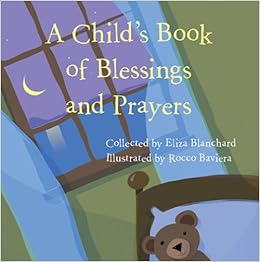
<-- This book looks great and has been on my radar for quite some time. It contains prayers for all times of day and various occasions. And it's prayers come from a wide variety of religious traditions.


<-- "The Book of New Family Traditions" is one that I purchased years ago and turn to often for new ideas. You'll find ideas for holidays, as well as daily, weekly and monthly rituals. There is even a specific section for mealtime "graces." 


<-- "Saying Grace" looks like a perfect resource for families in need of mealtime blessings.  This book holds a collection of 120 blessings - specifically for mealtimes - from across the globe. You're bound to find something you like in here.


Is "saying grace" already a part of your family's mealtime routine? And if not, do you incorporate any other traditions into mealtimes and/or Thanksgiving?

Tuesday, November 19, 2013

Teaching Children about Hanukkah


Hanukkah is actually starting the day before Thanksgiving this year - a little earlier than usual! So it's time to get prepared if you want to teach your children a little about Hanukkah.

Head over to Wendy Thomas Russell's great blog to learn more about the history and meaning of Hanukkah.

Books about Hanukkah:

We were able to find a couple of books at our library that explained the story of Hanukkah without being too wordy (and, therefore, boring) for my 5 and 4-year-old. 

http://amzn.com/0823425479
"The Story of Hanukkah" by David Adler was a great book, and one that my 5-year-old had already discovered on the Reading Rainbow app for iPad. It's pictures are colorful and engaging, and the story line was accurate yet not overly simplified for kids. 

http://amzn.com/157505583X
Our library didn't have a lot of fantastic options for Hanukkah books, but I'm so glad I found this one! This book, called "Hanukkah" by Cathy Goldberg Fishman, is a great one for early readers and young children. It simplifies the information in a way that is very easily to understand (and remember!), while really providing a LOT of good information about the history and traditions of Hanukkah. Don't pass this one up!

Activities:

Hanukah Menorah From TP Rolls kid's craft

Instead of buying a menorah, I think that the girls and I are going to try to make one. I found several options on Pinterest, but the one I liked the most was this one - made from toilet paper rolls - at Creative Jewish Mom. 

Two-Potato Latkes

We're going to be making some traditional latkes, but we're tweaking the recipe just a bit since we are experimenting with some gluten-free changes to our diet right now. I found a great recipe from Jamie at Joy of Kosher that adds some rice and rice flour to the mix. 

We're also going to be playing some dreidel if I can find one in Japan! ;)

Again, Wendy Thomas Russell has a great how-to post on three different Hanukkah traditions, so check that out if you need dreidel rules or information on lighting a menorah.

Do you have any other resources or activities that you use to educate your children about Hanukkah?